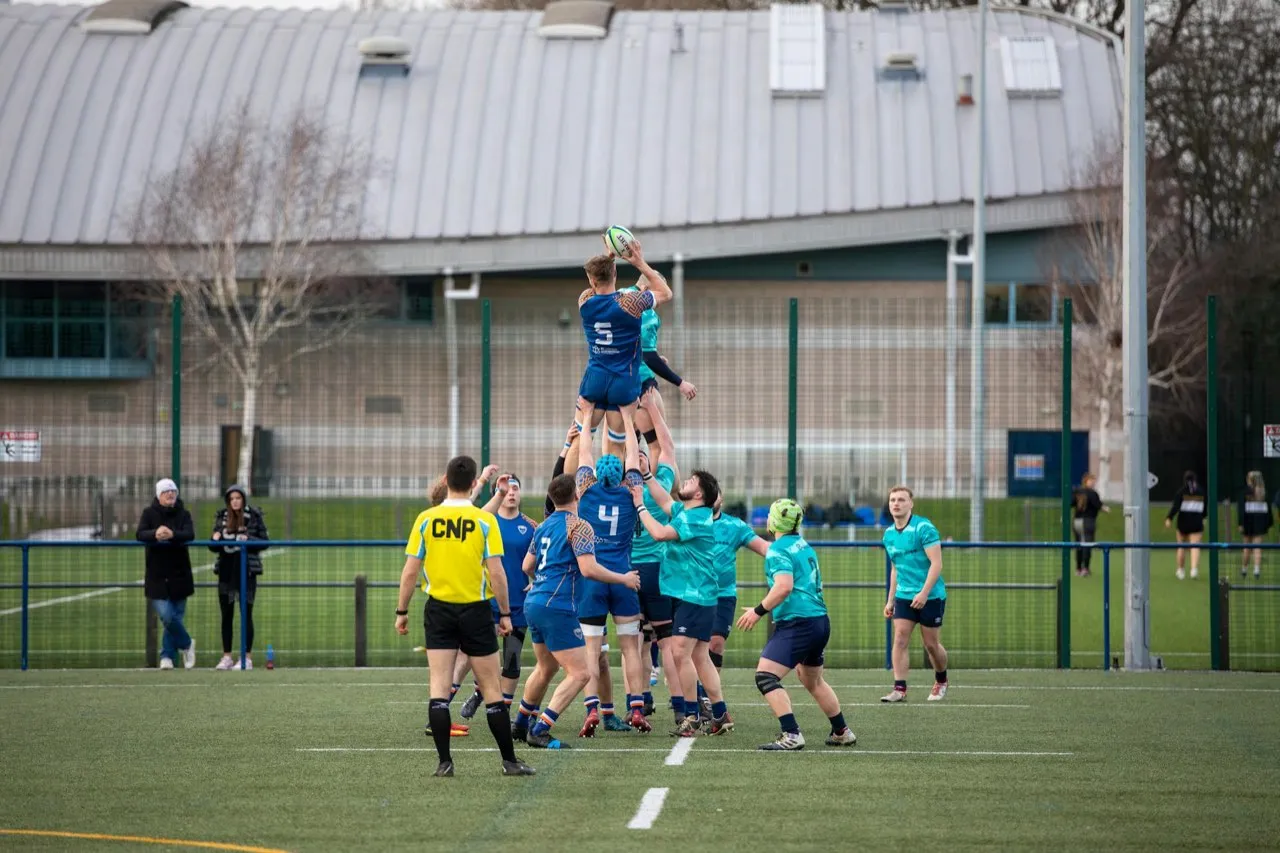
Matches are won and lost at the set piece. Lose your own lineout on your five-metre line and it does not matter how well you played for the other seventy-nine minutes. The good news for anyone with a laptop is that the set piece is the most structured, rehearsed part of rugby, and structure is exactly what analysis feeds on. If there is one area where AI pays off fastest, it is here.
Why set pieces are made for analysis
Open play is chaos. Set pieces are choreography. Every lineout has a call, a formation, a jumper, and a throw. Every scrum has a setup, a feed, and a shove. Because they repeat, the data stacks up quickly, and patterns become obvious in a way they never do in the loose. That makes the set piece the ideal place to start if you are putting AI to work, which we cover more broadly in how to use AI to analyse rugby. Capture the games, structure the events, and you can interrogate every set piece you have ever run.
Lineout: zones, calls, and what you give away
The lineout is where analysis earns its keep first. With structured data you can measure success by zone and by call family, not just an overall completion percentage that hides where you are actually leaking ball. You can see which calls work against which defensive setups, whether you are too predictable on your own throw, and how an opponent disrupts you. Just as importantly, you can scout the opposition’s lineout the same way, which is its own job we cover in scouting rugby opposition with AI. The aim is a throw your hooker trusts and a defence the other side cannot read.
Scrum: stability, timing, and the penalty count
The scrum is harder to read with the eye, and easier to argue about, than any other part of the game. Data helps cut through it. Tracking scrum stability, the timing of the engagement, and where penalties are won and conceded turns “the referee had it in for us” into something you can actually work on. Pair the footage with player tracking and you can see whose body position slips under load, which is where computer vision and GPS tracking start to earn their place.
Restarts and the kick-chase
Restarts are the set piece teams neglect most, and the one that swings momentum hardest. A contestable restart you reclaim is a free attacking platform; one you spill hands the opposition a chance for nothing. Analysis lets you measure your reclaim rate, map where your kicks land, and study how an opponent sets up to receive, so you can attack the gaps. These are exactly the metrics that matter but rarely get tracked properly.
Where AI fits, and where humans still must
Set-piece analysis is where automation is most tempting and most dangerous. The margins are tiny, and a model that miscounts one lineout in ten is not good enough when you are deciding whether to change your throwing or your caller. This is the clearest case for the bet we are taking at Framesports: a human-in-the-loop approach, with people at the centre, so you never trade away the accuracy the set piece demands.
The fastest return in the game
Start your AI analysis at the set piece and you get the clearest return on offer. It is structured, it repeats, and small gains in lineout completion or restart reclaim show up directly on the scoreboard. You can see how the product handles set-piece data feature by feature, and how teams at every level use it to win the parts of the game that decide matches.