Most rugby “facts” are really just things people repeat. We wanted to know what the game actually looks like when you count it, so we went through the Framesports data. Framesports has analysed millions of events across thousands of matches, spanning every level of rugby from community to the elite end, on the most accurate data collection system in the game. Here are the headline numbers, and the ones that surprised us.
What actually goes with scoring
Start with the question every team cares about: what does a side that scores more tries do differently? We took each match and measured how a team’s own try count moved with the rest of its game. The answer is not what the territory-and-phases orthodoxy would have you believe.
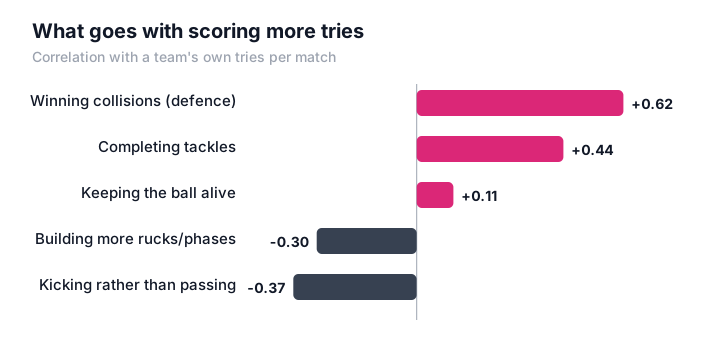
The two things that travel most closely with scoring are both defensive: winning the collision in the tackle, and simply completing tackles. The two that pull the other way are grinding through more rucks and kicking instead of passing. So the sides that score are not the ones camped on the ball through endless phases or booting it downfield for territory. They win contact, they keep tackling, and they play with ball in hand. That single chart reframes most of what follows, and we unpack each piece below. (These are observed relationships within a team’s own matches, not proof of cause, and we have left out 22 entries, which track tries so tightly they tell you nothing you did not already know.)
The baseline: the success rates that define a match
Rugby is a game of repeated contests, and most of them are won more often than people assume.
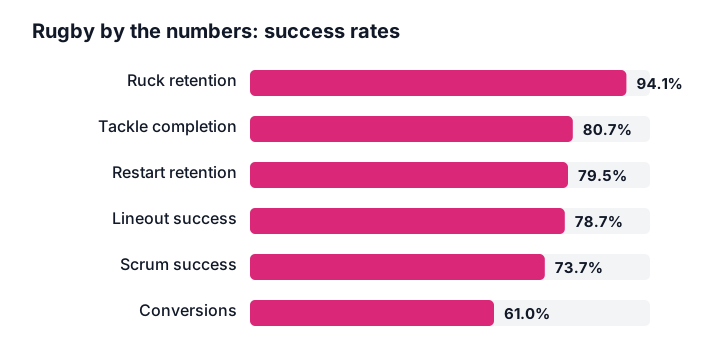
- Ruck retention: 94.1%. Teams keep the ball at the vast majority of their own rucks. The breakdown is far more secure than its reputation, and a lost ruck is the exception, not the norm.
- Tackle completion: 80.7%. Around four in five attempted tackles are completed. The missed one in five is where a lot of line breaks come from.
- Lineout 78.7%, scrum 73.7%. Set piece is reliable but not automatic, and the scrum is the messier of the two once resets are counted.
- Conversions: 61%. Only three in five conversions are kicked, a reminder that this is all of rugby, not just professionals with specialist kickers.
The collision is won more often than it is lost
On the ball, the carrier wins the collision 89.1% of the time in our data, which is less a sign of attacking genius than of physics: the carrier has momentum and falls forward, so winning contact is close to the default. Only 14.2% of completed tackles are dominant, where the tackler wins the contact, so a defence that wins the collision is doing something rare. And it pays off in an unexpected place: the teams that win more collisions on defence also tend to score more tries themselves. We dig into why in the real tackle and collision numbers.
Teams kick more, and shorter, than you would guess
The average kick travels 24.8 metres, with a median of 25, and teams kick about 16 times a match. That is a lot of deliberately surrendered possession, and most of it is the short-to-medium territorial kick rather than the booming clearance people picture. There is a whole post on how far rugby teams actually kick.
Scoring is about more than territory
Teams in our data score around 7 tries a match, and about 57% of 22 entries end in a try. The tempting read is that it is all about field position, but that 57% cuts both ways: get into the 22 and you come away with nothing 43% of the time. The tries that matter most tend to come from line breaks and turnover ball, attacking a defence that is not set, rather than from grinding territory. We make the full case in why 22 entries matter less than you think.
What this means for your team
The numbers point at where matches are actually decided. Ball retention at the ruck is already high across the game, so the edges are elsewhere: completing more than your share of tackles, winning the collision when you carry, and turning 22 entries into points rather than pressure. Chase those three and you are working on the levers the data says matter, which is the whole idea behind the metrics that actually matter.
How we worked this out
These figures come from the Framesports data: millions of events across thousands of matches spanning every level of rugby, from community to the elite end. They are built on the most accurate data collection system in the game, so the numbers are reliable. They reflect the analysed team’s events in each match; we do not infer opposition figures or final scores, so nothing here is a claim about who won. For the rest of the series, see kicking, tackling and collisions, set piece, and scoring. The same data powers the Framesports platform.