The set piece is where rugby resets, and where a lot of matches quietly turn. “Win your own ball” is the oldest instruction in the game, but how often do teams actually manage it? We counted across thousands of matches in the Framesports data, at every level of the game.
Lineout: one in five goes wrong, about as you’d expect
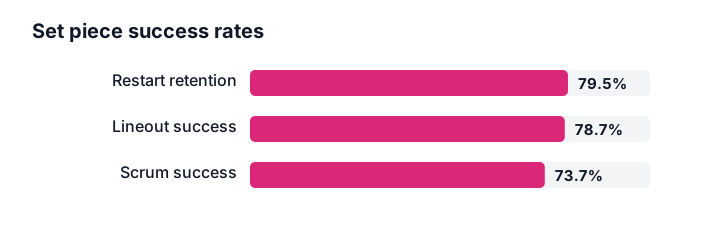
Lineout success across our data is 78.7%, so roughly four in five are won cleanly and one in five is lost or scrambled. That is about what anyone who watches rugby would guess, and it matters because the lineout is the modern game’s main attacking launchpad: strike plays off the top, and the driving maul, which good packs now set up from well outside the 22. Lose two or three on your own throw and you have handed over a string of those platforms. The real edge, though, is at the other end, stealing the opposition’s throw, because a defensive lineout steal is a turnover with their forwards committed and the field open.
Scrum: the messy one
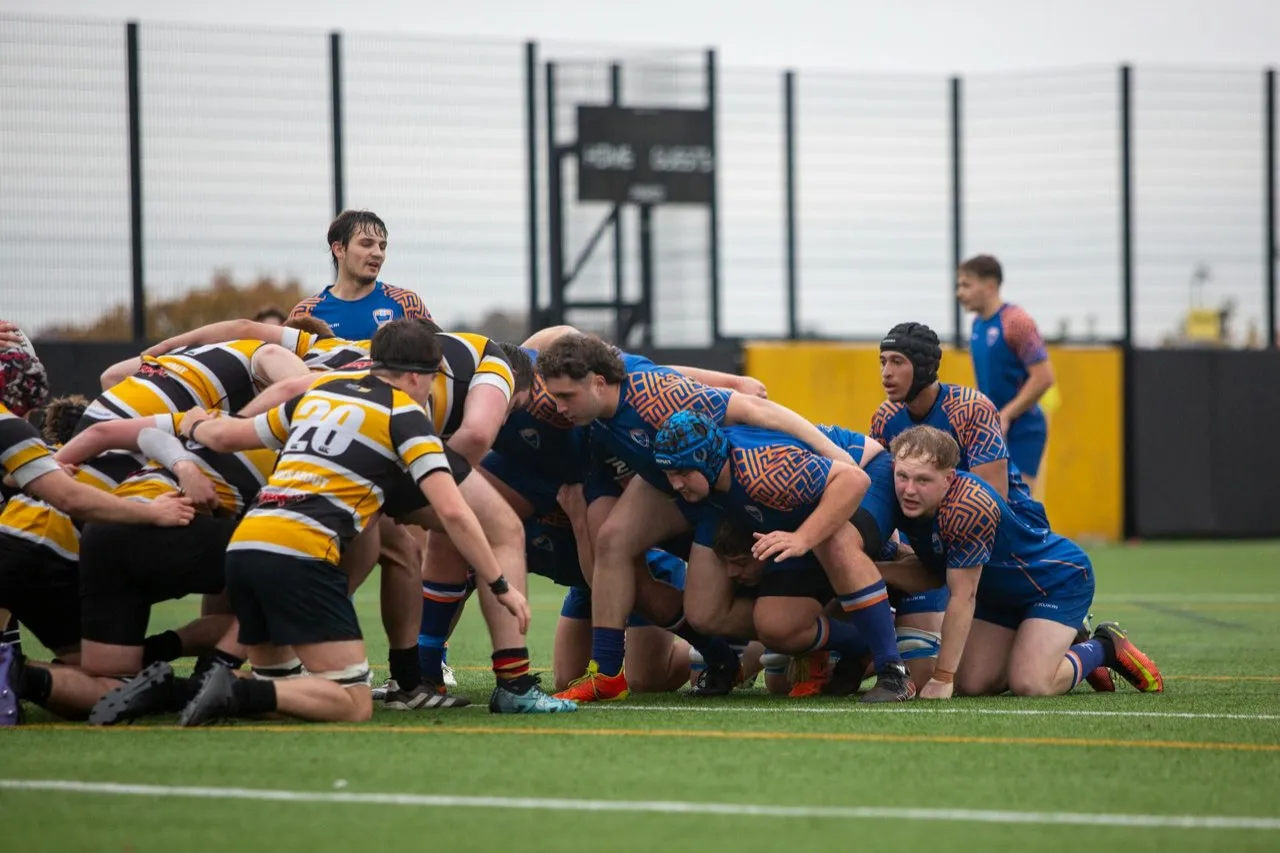
The scrum comes in lower at 73.7% once resets are counted, which makes it the least clean set piece in the game. Resets, free kicks, and penalties churn through scrum time, and that churn is the point: the scrum is less a way to restart play than a way to win penalties, three points from the tee or a kick to the corner, and to shape how the referee sees the contest for the rest of the match. South Africa built a World Cup final around exactly that. A dominant scrum does not need to produce clean ball to be worth a fortune.
Restarts: one in five go wrong
Restart retention sits at 79.5%, almost identical to the lineout. Roughly one in five is lost, which simply switches possession, usually in your own half. It is as much a contest as the lineout or scrum, and worth treating as one.
Where improving your set piece actually pays off
Now the part coaches get wrong in both directions. It is tempting to read flat numbers and conclude the set piece does not matter for scoring, and across our data a team’s set-piece success rate does barely separate the high scorers from the low ones. But that is not because the set piece is unimportant. It is because almost every team already lives in the same narrow band, somewhere between roughly 73% and the low 90s. Within that band, another point or two of lineout success genuinely does not move your try count much.
The damage lives below the band, not within it. Let your set piece actually fall apart, lose your own ball repeatedly, and it is catastrophic: you cannot launch anything, you are pinned in your own half, and the scoreboard follows. Almost no team in our data sits there, which is the whole point. The job is to get reliable, somewhere past the mid-80s, and then stop optimising.
Because past that point you hit diminishing returns. Squeezing your lineout from 88% to 92% is a lot of training time for very little scoreboard. The same hours spent keeping more ball in hand or winning more collisions, the two things that actually track try-scoring in our data, give you far more back. Get your set piece solid, then spend your edge elsewhere.
What this means for your team
Treat the set piece as a floor to clear, not a number to chase. Get your lineout, scrum and restart reliable, past the mid-80s where they stop costing you, and make sure they never collapse. Once they are solid, the marginal hour is better spent on attack with ball in hand and on the collision, not on grinding another two points of lineout success you will barely feel.
How we worked this out
Based on the lineout, scrum and restart events in the Framesports data: millions of events across thousands of matches at every level, built on the most accurate data collection system in rugby, so the numbers are reliable. Scrum success counts resets as non-completions; counting only clean win/loss puts it higher. Figures reflect the analysed team’s set pieces. See rugby by the numbers for the full picture and what scoring looks like for where the points come from.