In most amateur clubs the blocker on analysis is not the coach. The coach was sold the first time they watched a match back and spotted something they had missed live. The blocker is a committee of eight people, at least two of whom think this is money that should go on the pitch.
That is a fair position, and the pitch that wins is the one that takes it seriously. Here is what works.
Lead with the problem, not the product
Do not open with software. Open with the thing the committee already complains about.
Most clubs have one of a small number of recurring frustrations: players who do not improve between seasons, a first team that keeps losing the same way, a colts group that leaks players to a rival with better facilities, or a coaching group running on fumes. Name the one your club actually has, in the club’s own language, before anything else.
If you cannot name it, you are not ready to pitch. A proposal that opens with a feature list gets treated as a purchase. A proposal that opens with a problem the room recognises gets treated as a solution.
Bring one clip, not a presentation
The single most effective thing you can do is put ninety seconds of your own team on a screen.
Not a vendor demo, not somebody else’s rugby. Your side, from a match the committee watched, showing one thing that went wrong and one thing that went right. Then say: this is what every match looks like when it is tagged, and any coach can find this in seconds instead of scrubbing through two hours.
Committees approve things they can picture. Nobody can picture a dashboard. Everybody can picture their own back row.
Answer the volunteer question before it is asked
Somebody will say “who is going to run all this?” and if you do not have an answer ready the proposal stalls there.
This is the honest crux of it, and it is worth being straight. Filming is a job. Getting the footage uploaded is a job. Tagging the match is a much bigger job than anyone expects, and it is the one that kills club analysis programmes. We wrote up the real cost of doing it yourself precisely because most clubs discover it after they have committed.
If you are proposing a done-for-you service, this is your strongest argument and you should make it explicitly: the reason to pay is that the volunteer hours are the expensive part, and this removes them.
Put it against something they already fund
Committees do not evaluate costs in isolation. They evaluate them against the other things on the list.
So do the comparison for them. Set it beside a set of match balls, a portion of the post-match food budget, a single away coach hire, or the affiliation fees they approve without discussion. The point is not that analysis is cheap. The point is that it is the same order of magnitude as things the club funds every year without a debate, and it is one of the few that touches every team rather than one.
Ask for one season, with a stated review
The proposal that gets approved is almost never “let us do this permanently”. It is “let us do this for one season and look at it again in May”.
That framing works because it converts an open-ended commitment into a bounded experiment, which is a much easier thing for a cautious treasurer to vote for. It also protects you: if it does not work, you said in advance that you would stop.
Say what you will review against. Something like: every first team match filmed and analysed, the coaches using it weekly, and players able to see their own clips. Those are checkable, which is the point.
Name who is accountable
Committees fund people more readily than they fund things. Say who owns this: who arranges filming, who is the point of contact, who reports back in May.
If the answer is “the coaches will sort it out”, expect to be asked again next month. If the answer is a named person with a defined job, the proposal reads as a plan rather than an aspiration.
Expect these three objections
“We tried this before and it fizzled out.” Many clubs did, and it nearly always fizzled at the tagging step rather than the filming step. Say what is different this time. If nothing is different, they are right to be sceptical.
“Only the first team will benefit.” Answer it directly with which teams are included from day one. If the answer really is first team only, say so and justify it rather than overselling.
“Is this not a bit professional for us?” This one is about identity more than money, and it deserves a real answer. The useful framing is that the tools exist now at a price built for clubs and schools rather than professional programmes, and that using them is not a claim about how serious the club is. It is the same argument the club already accepted about a physio, or a proper first aid kit, or a decent set of scrum pads.
The one-page version
If you take nothing else in: one problem the room already recognises, ninety seconds of your own footage, an honest answer on who does the work, a comparison to something already funded, and a one-season ask with a stated review date and a named owner.
That is a proposal. Everything else is a brochure.
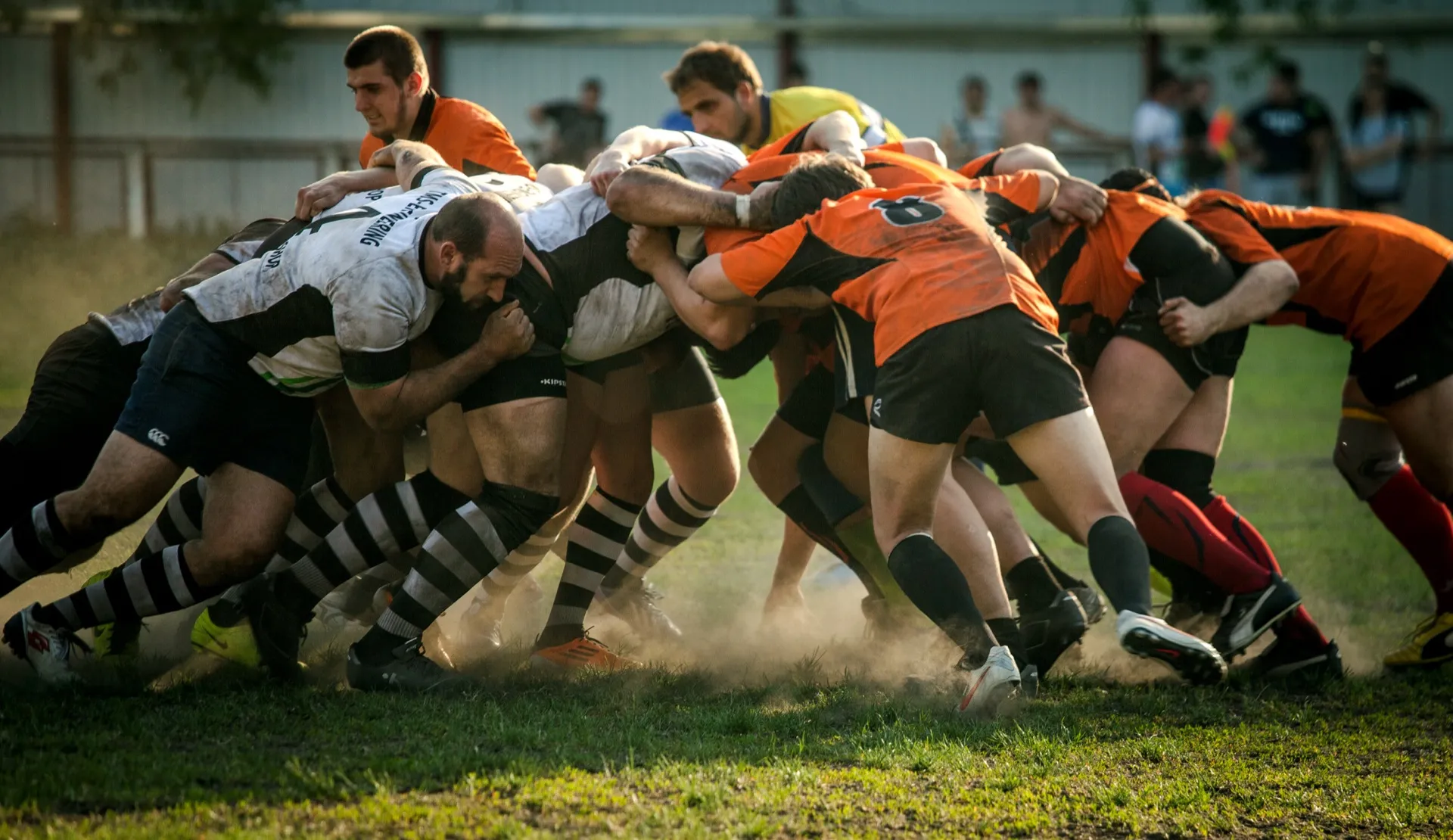
Hero photo: Mutney, CC BY 4.0, via Wikimedia Commons.