A rugby team knocks on or throws a forward pass about seven times a match, so a typical game has more than a dozen of them, and almost nobody counts them. A knock-on is the ball going forward off a player’s hand or arm and touching the ground or another player, and the law hands the ball to the other side at a scrum. Nobody makes a highlight reel of them. They are the small, forgettable errors that never get replayed, and yet they quietly decide as many matches as any clever move. Every one of them is a possession you worked to win and then handed straight back. So we measured how often it happens, across thousands of matches from every variety of rugby, men’s and women’s, from amateurs to professionals.
A team coughs it up about seven times a match
The average side in our data knocks on or throws a forward pass around seven times a game. Put both teams together and that is more than a dozen handovers a match, gifted for nothing. No breakdown steal, no clever kick, no pressure play, just the ball on the floor and possession reversed. It is one of the most common ways a team hands back ball it had already won, and comfortably the most avoidable.
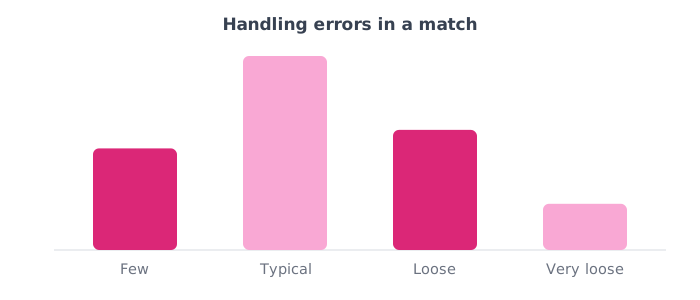
Every error is a possession you built and binned
The cost is not the error itself, it is everything that came before it. A knock-on on the second phase throws away a won lineout. A forward pass on the fifth phase throws away four phases of work and the field position that came with them. Worse, many errors happen going forward, so you are not just losing the ball, you are losing it with your defence out of shape and the opposition running back at the space you just vacated.
They spike exactly when you can least afford them
Handling errors are not random. They climb in the wet, they climb late in games as legs go, and they climb when players force the offload that was not on. The last one matters most, because it is a decision, not an accident. The ambitious pass in contact is a wonderful thing when it goes to hand and a gift to the opposition when it does not, and telling the difference under fatigue is a coachable skill.
What to do with this
Train the basics tired, not fresh. Catch-pass work at the start of a session, when everyone is sharp, flatters your handling and teaches you nothing about round seventy. Put the skill work after the conditioning, when hands are heavy, because that is when the errors actually happen. And be honest about the offload: reward the ones that are on, coach out the ones that are hope. A team that simply holds onto the ball it has already won has found extra possession without a single new play.
How we worked this out
Based on handling errors made by analysed teams across thousands of fully analysed matches spanning every variety of rugby, men’s and women’s, from amateurs to professionals, deduplicated so no fixture is counted twice. We record the knock-on and the forward pass together as a single handling error, so we report them as one honest figure rather than splitting them artificially. Figures reflect the analysed team’s errors, the side of the game our data captures most completely. For the flip side, how few passes a try really takes, see how many passes does a try actually take.
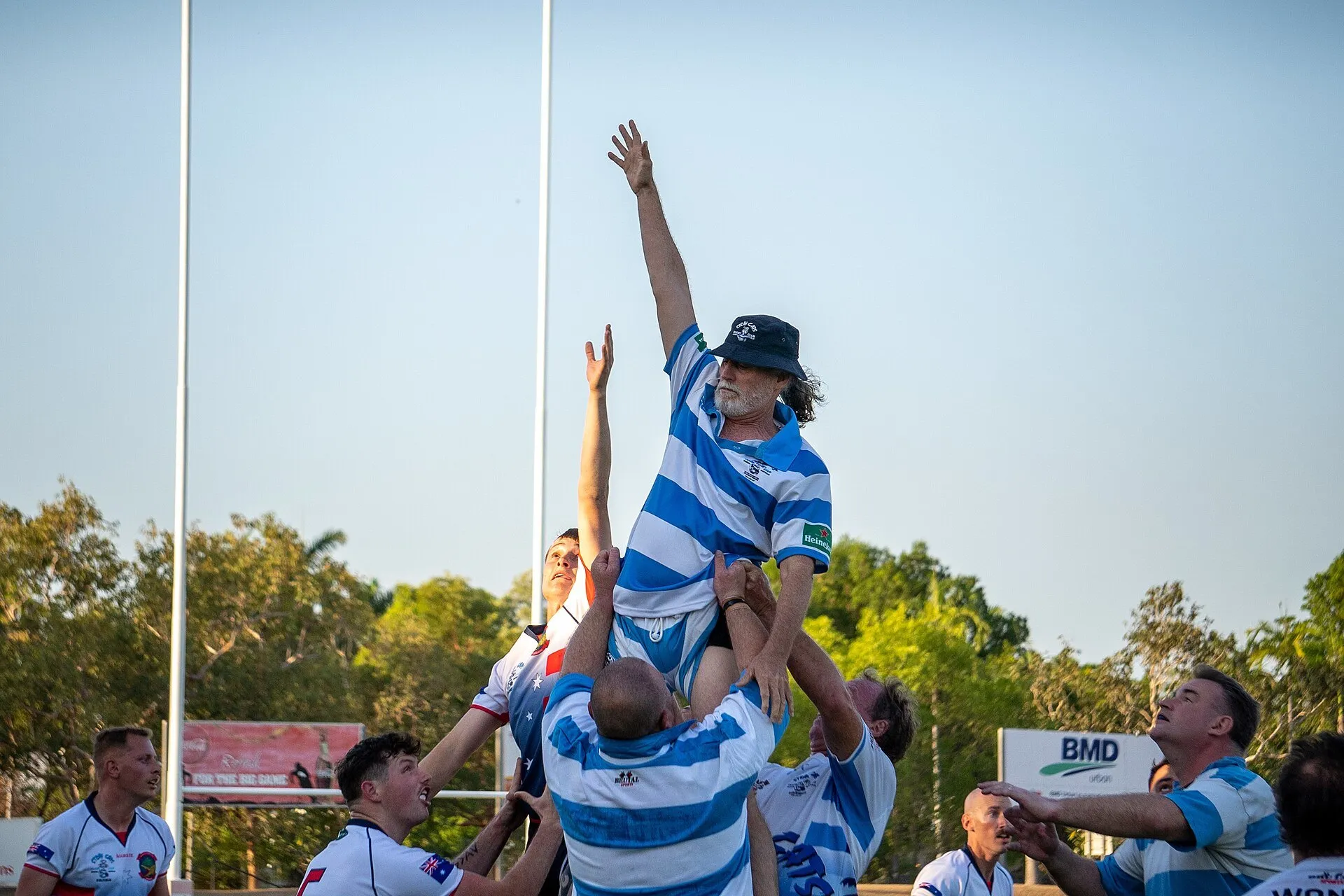
Hero photo: John Walton, CC BY 2.0, via Wikimedia Commons.