Coaches love a phrase about “earning the right” to go wide, and every squad has a player convinced the answer is always one more pass. So we looked. We collected over 13,000 tries, from amateurs to professionals across the men’s and women’s game, and counted the passes in the possession that produced each one. The move that scores is usually a lot shorter than the one you remember.
The typical try is a short, sharp thing
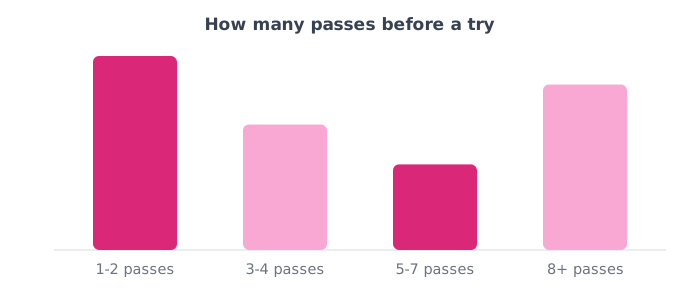
The median try in our data is scored after only about four passes. Not four phases, four passes. The twenty-phase epic that ends with a prop falling over the line is real, and it is glorious, but it is the exception. Most tries are built quickly, from a clear platform, before a defence has had time to reset and reload.
About a third come from almost no passing at all
Roughly one try in three is scored off two passes or fewer. These are the strikes off a turnover, the pick-and-go from five metres, the break that needs a single supporting pass. They share one thing: they happen when the defence is disorganised, either because they have just lost the ball or because a set piece has pinned them in. Chaos, in other words, is a try-scoring platform, and the teams that pounce on it fastest score the most.
The long build still pays, if you can sustain it
At the other end, about another third of tries arrive after eight passes or more. Patience is not dead. Against a well-set defence, stringing phases together to drag defenders around and find the soft shoulder is exactly how you break them down. The catch is that it demands handling under fatigue and real fitness, because one knock-on and the whole investment is gone.
What to do with this
Two things. First, treat the quick strike as a skill to rehearse, not a fluke to hope for. The most reliable tries in our data come off turnovers and set pieces close to the line, so drill the first two phases after you win the ball as hard as you drill any set move. Second, if you back the long game, back it properly, with the conditioning and the hands to survive eight phases. Build the gameplan around how tries are actually scored at your level, not around the one screamer from last season.
How we worked this out
Based on over 13,000 tries scored by analysed teams, across thousands of fully analysed matches spanning every variety of rugby, men’s and women’s, from amateurs to professionals, deduplicated so no fixture is counted twice. For each try we counted the passes our analysts recorded in the possession that led to it, from the moment the team won the ball to the moment it was grounded. Figures reflect the analysed team’s tries, the side of the game our data captures most completely, and we rebuild each scoreline from the same tagged events to check the try tags hold up. For where those tries begin on the pitch, see where tries actually come from.
Hero photo: PierreSelim, CC BY 3.0, via Wikimedia Commons.