“Quick ball” might be the most repeated instruction on any training pitch, and one of the least defined. Everyone wants it, nobody agrees what it is. So we measured it. Across hundreds of thousands of breakdowns in our data, from amateurs to professionals across the men’s and women’s game, here is how long the ball actually spends on the floor.
The average ruck is cleared in about three seconds
From the moment a tackle forms to the moment the ball leaves the base, the typical breakdown lasts around three seconds. That is faster than most coaches guess, and it tells you how little time the players around the ruck have to make a decision. The scrum-half is not waiting, the ball is already moving, and the support has to arrive as if it is.
More than half of all ball is genuinely quick
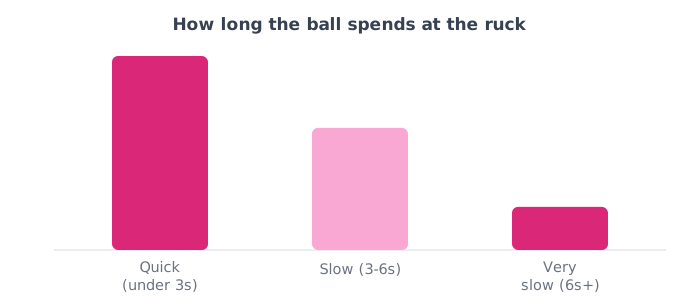
Split the breakdowns by speed and over half of them are cleared inside three seconds. So quick ball is not rare, it is the norm, which reframes the problem. The question for most teams is not how to produce quick ball, it is how to stop leaking the slow ball that hands the initiative straight back. The slow ruck is the one worth hunting in your own footage.
The slow seconds are where attacks die
The gap between three seconds and six is where a defence goes from scrambling to set. On quick ball, the line is still folding and there are numbers to attack. On slow ball, everyone is up, square and off the line, and your shiny backline move runs into a wall. It is the same players, the same move, and a completely different outcome, decided by a second or two at the previous ruck.
What to do with this
Time your own recycle. Most clubs never do, and it is the single easiest breakdown metric to track. Then coach the two things that move it: the tackled player’s presentation and the speed of the first support arriving to clear. A second saved at the ruck is a defender still out of position at the next one, and that is where tries come from. If your attack keeps stalling, the fix is often one ruck earlier than you think.
How we worked this out
Based on hundreds of thousands of breakdowns across thousands of fully analysed matches spanning every variety of rugby, men’s and women’s, from amateurs to professionals, deduplicated so no fixture is counted twice. Ruck speed is the recorded time from the breakdown forming to the ball leaving it, and we report medians so that the odd long stoppage, an injury or a reset, does not drag the picture. Figures reflect the analysed team’s ball, the side of the game our data captures most completely. For what fast ball is worth once you have it, see where tries actually come from.
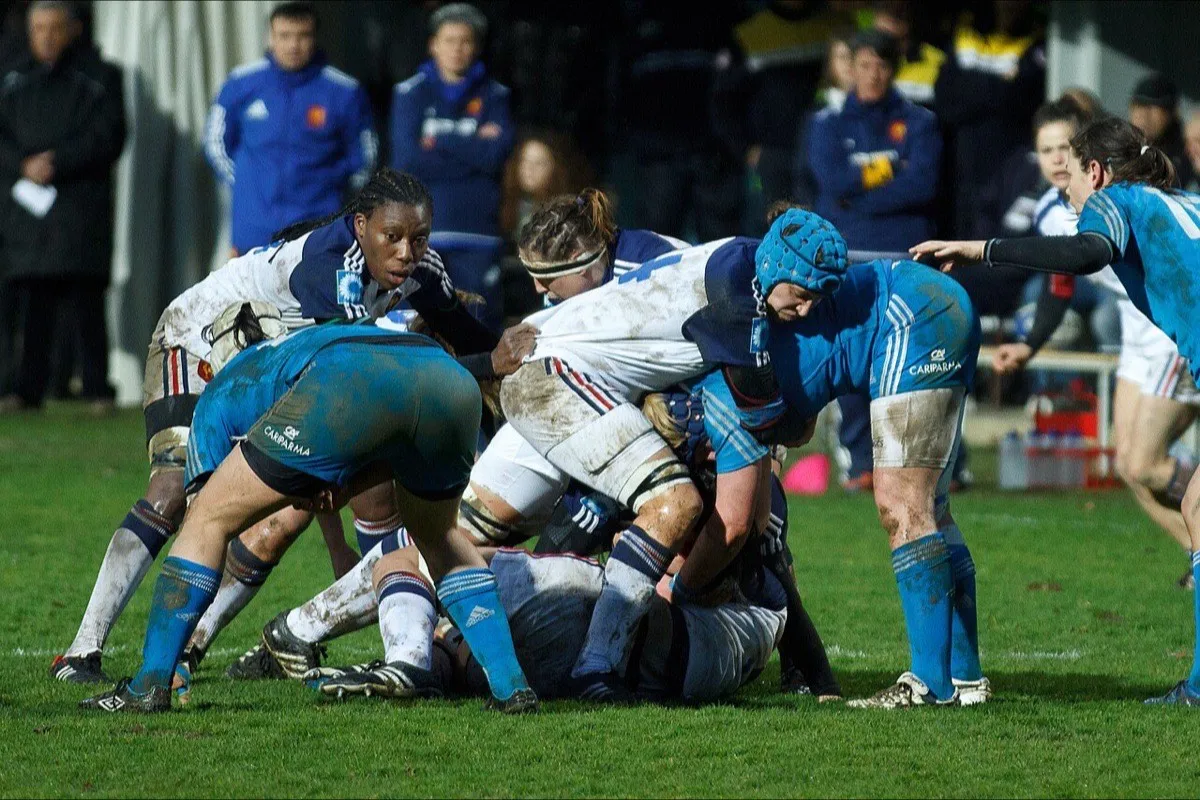
Hero photo: Pierre-Selim Huard, CC BY 3.0, via Wikimedia Commons.