Every coach has given the “cut out the silly penalties” speech, usually at half-time, usually too late. The trouble is that “silly penalties” is not a plan. So we looked at where they actually come from. We collected the penalties teams give away across thousands of matches, from amateurs to professionals across the men’s and women’s game, and the pattern is clear enough to do something about.
A team gives away ten or eleven a match
The average side in our data concedes ten or eleven penalties a game, which means the two teams together hand over more than twenty. Each one is a free exit, a chunk of territory, a shot at the posts or a lineout in your 22. Put together, that is the single largest source of easy points and easy field position in a match, and most of it is self-inflicted.
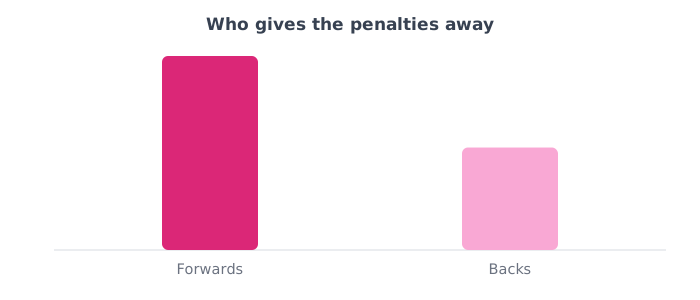
The forwards give away about twice as many as the backs
Split the count by position and it is not close. The forwards concede roughly twice as many penalties as the backs. That is not a knock on the pack, it is simply where the contest lives: the tackle, the ruck, the scrum and the maul are all forward country, and they are all refereed tightly. If you want to move the number, that is the ground you have to win.
The usual suspects wear 7, 1 and 8
Narrow it further and the same shirts keep coming up. The openside flanker tops the list, which is the price of living on the edge of legality at every breakdown. The front row is close behind, where the scrum is a penalty waiting to be awarded one way or the other, and the number eight rounds out the group. None of that is a surprise to a forwards coach. What matters is that a handful of roles account for most of the damage, so that is where the coaching time should go.
What to do with this
Do not spread your discipline work evenly, aim it. The breakdown and the scrum are where your penalties are made, so that is where the accountability belongs, ideally with the specific players who compete there most. Frame it in what it costs, because a penalty is often a free forty metres and a lineout, or three points, not an abstract telling-off. Clean up the two biggest sources and you have effectively found yourself extra possession and extra territory without a single new move.
How we worked this out
Based on penalties conceded by analysed teams across thousands of fully analysed matches spanning every variety of rugby, men’s and women’s, from amateurs to professionals, deduplicated so no fixture is counted twice. For our own side we can see the shirt number of the player penalised, which is how we split the count by position, using jersey number as a fair proxy where squads are picked close to 1 to 15. Figures reflect the analysed team’s penalties, the side of the game our data captures most completely. For the other side of discipline, the points you win from the tee, see kick for the corner or the posts.
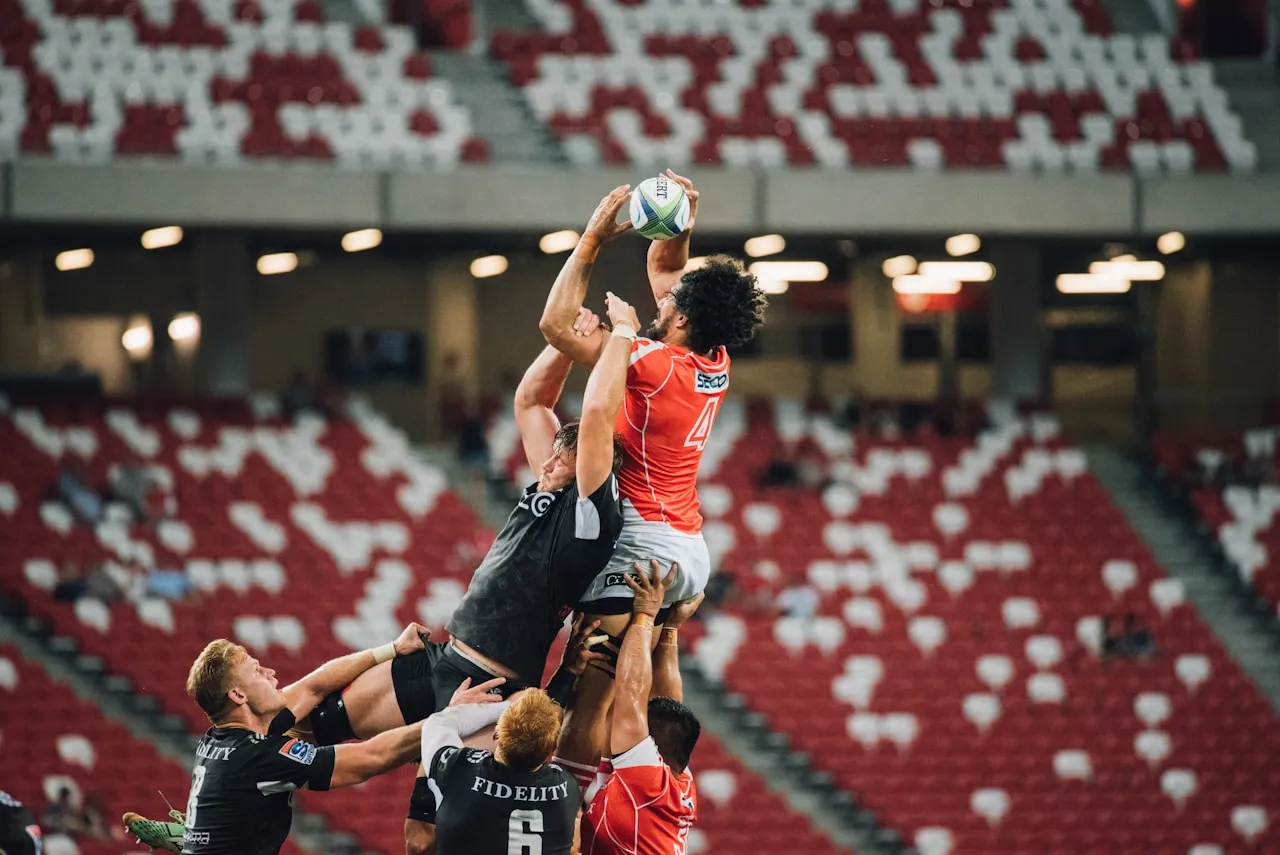
Hero photo: Henning Schlottmann, CC BY-SA 4.0, via Wikimedia Commons.