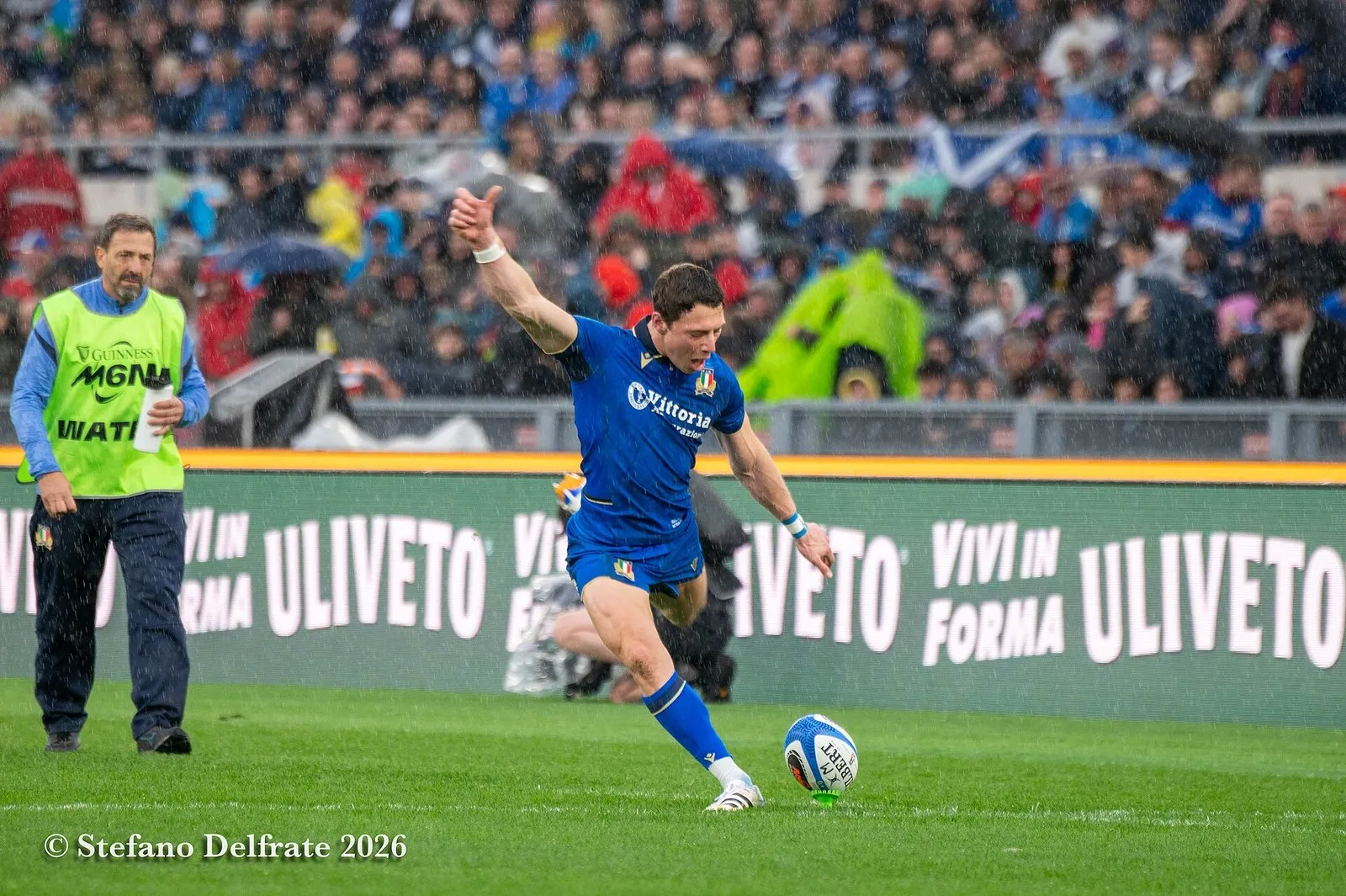
You are five metres out, you have just won a penalty, and fifteen players are looking at you. Posts or corner? Most captains decide on feel. We pulled every kick at goal in the Framesports data to give you something better than feel: tens of thousands of conversions and penalties at goal, from grassroots clubs up to the professional game.
The numbers on the tee
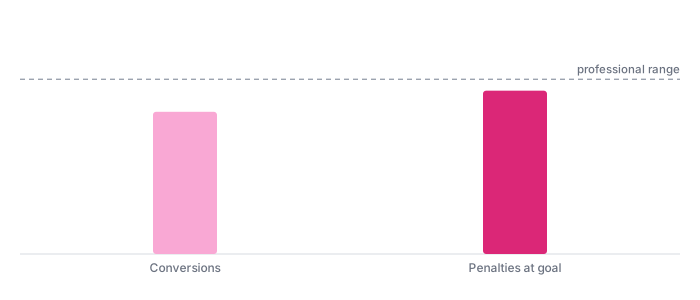
At community level, conversions go over only about two times in three, and penalties at goal a little more reliably than that. The best professional kickers land closer to four in five, on flat pitches with a specialist coach. But in a crosswind and mud, with whoever has the best boot, you should plan around a conversion being not much better than a coin flip and a penalty being a solid but not certain bet. That is lower than most captains assume, and it changes the maths.
Why the penalty is the surer bet
Penalties beat conversions, and not because they are easier kicks in principle. It is about where each one is taken from. A conversion has to be struck from in line with where the try was scored, so a try in the corner is a horrible kick. A penalty at goal is usually only attempted when it is already kickable. Which means the try you score matters as much as the fact you scored it: a try under the posts is worth close to a guaranteed seven, while a try in the corner is often just five.
So, corner or posts? The break-even is about a third
Do the maths with our numbers. Taking the three points is worth a shade over two points on average, once you allow for the odd miss. Going to the corner, a try is worth five plus a conversion better than half the time, so more than six points if you score it. Put those together and the corner beats the posts whenever the attack from that kick scores a try more than about one time in three. That is the same break-even professional analysts land on, and studies of elite rugby suggest even Test teams often fall short of it from a five-metre lineout.
The catch is that “if you score it” is doing a lot of work, and it rests entirely on your lineout and your maul. If your lineout is a coin flip, your real chance of scoring from the corner is well under a third, and you should take the points every time. If you have a dominant driving maul and a throw you trust, the corner is the higher-value call almost always. The decision was never about bravery. It is about knowing your own set piece.
What to do with this
Know your kicker’s real number, not their good-day number. Track conversions and penalties honestly over a few games and you will manage the back end of tight matches far better. Know your lineout’s real number too, because the corner-or-posts call is a set-piece question wearing a disguise. And practise the kick you actually face on a Saturday, a wide conversion in a swirling wind, rather than a comfortable row straight in front of the sticks. Our data is clear that the points teams leave out on the pitch are the ones from the touchline, not the tee in front of the posts.
How we worked this out
Based on tens of thousands of conversion and penalty attempts, tagged by our analysts across thousands of fully analysed matches from grassroots to the professional game, deduplicated so no fixture counts twice. Success rate counts both the analysed team and their opponents. The break-even above uses our own measured rates and a standard five-point try and two-point conversion; it ignores the small chance of losing the lineout outright, which nudges the real break-even slightly higher. To check the kick tags, we rebuild each scoreline from these same events and it lines up closely with the official result. For where the tries these kicks follow come from, see where tries actually come from.
Hero photo: Stefano Delfrate, CC BY-SA 4.0, via Wikimedia Commons.