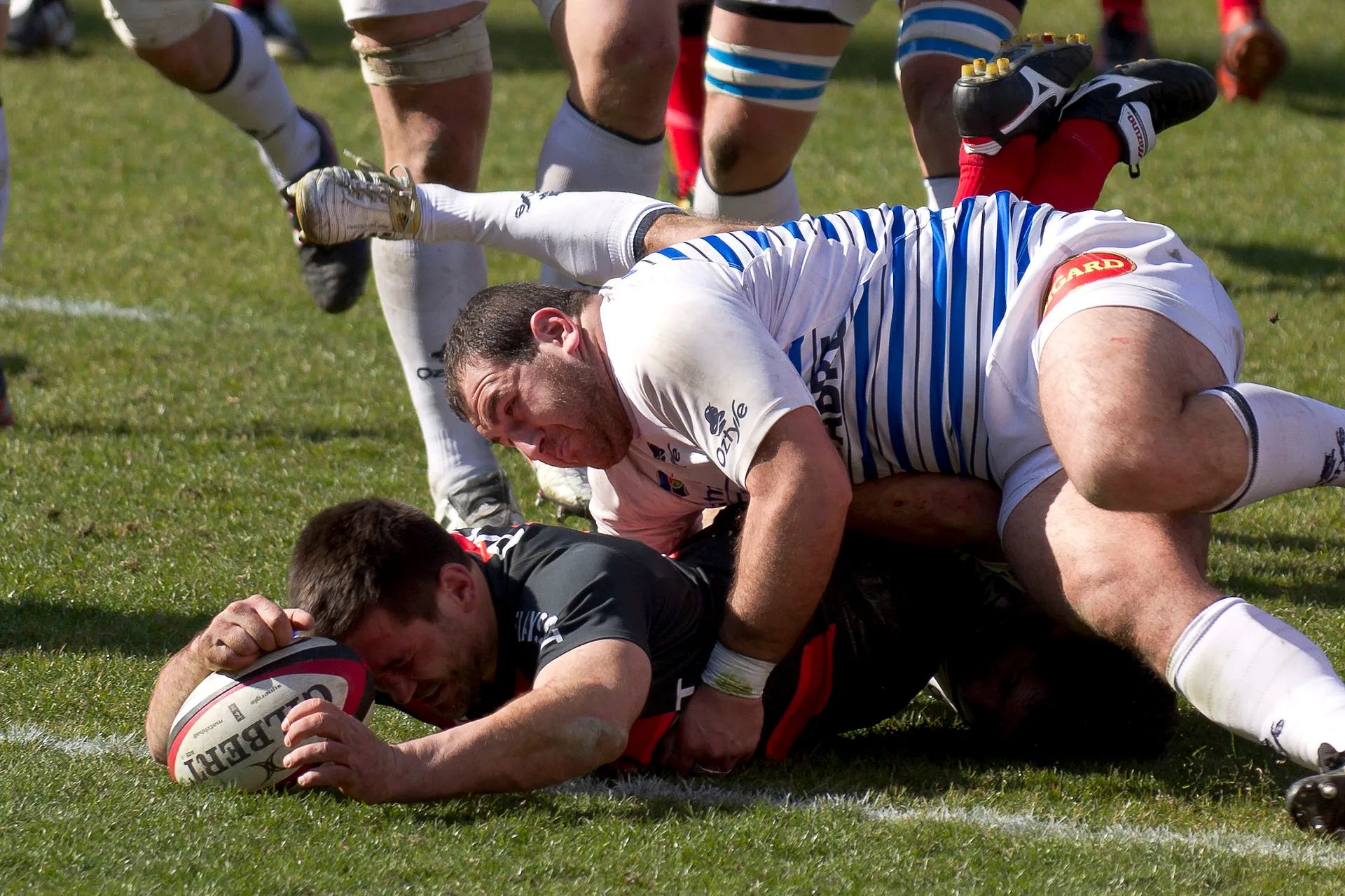
“Get us down there and we’ll score.” Every team talk prices the opposition 22 as if arriving is most of the job. We can put an actual price on it: we record every entry into the 22 as its own event, tens of thousands of visits collected across every variety of rugby, men’s and women’s, from amateurs to professionals, and we followed each one to see what it produced. A trip to the opposition 22 is worth between two and three points - real money, but a much thinner margin than the team talk implies.
Between two and three points a visit
A team makes about eight visits to the opposition 22 in a typical match. Credit each visit with the points scored soon after it, and the average comes out at between two and three points a visit, whichever way we draw the line on “soon after” - the figure holds whether we allow a minute or three. That is the honest exchange rate of territory: a visit is worth roughly a third of a converted try, not the seven points the huddle is imagining as the maul sets up.
More than half of visits produce nothing
The average hides the split. More than half of all visits to the 22 produce no points at all - the ball is turned over, kicked away, knocked on or penalised out, and the team trudges back. Roughly two visits in five end in a try soon after, and almost none end in a quick penalty goal, which tends to come later or from range. Getting there is genuinely half the battle. It is just that the other half is the one that decides matches.
Nearly every try flows through the 22
Run the question backwards and the 22 earns its reputation: nearly nine tries in ten come within a couple of minutes of a visit. Long-range interceptions and length-of-the-field scores are the exception, not the plan. So the currency is real - almost all points pass through this stretch of grass - which is exactly why the empty visits matter so much. When we tested the myth of possession, the advice was to measure points per entry into the 22 instead. This is that number, and most teams are leaving a third of it unbanked.
What to do with this
Count your visits and your points per visit - two tallies anyone on the touchline can keep, and together they beat possession as a picture of your attack. Then coach the empty visits, because that is where the margin lives: what actually ended each barren trip - a rushed pick-and-go, a lineout lost five metres out, a panic kick? At between two and three points a visit, the arithmetic also reframes the corner-versus-posts call: a kickable three is worth more than an average visit, so turning it down is a bet that this visit beats the average. If keeping these counts sounds like a job nobody at your club has time for, that is a solvable problem too.
How we worked this out
Based on tens of thousands of 22 entries among close to three million events recorded across thousands of fully analysed matches spanning every variety of rugby, men’s and women’s, from amateurs to professionals, deduplicated so no fixture is counted twice. Entries into the 22 are recorded for both teams, and we credited each visit with the points its team scored within a couple of minutes of the entry and before the next visit, testing windows from one to three minutes - the answer stayed between two and three points throughout. The check that the method holds: pricing the opposition’s visits through their own separately recorded events lands within a fraction of a point of the analysed team’s figure, two independent streams agreeing on the exchange rate. One honest caveat: penalty goals often arrive slowly, so quick-score crediting slightly undercounts them and the true figure leans a touch higher, not lower. Analysed teams are often the stronger side, and their events are the side of the game our data captures most completely.
Hero photo: Pierre-Selim, CC BY-SA 3.0, via Wikimedia Commons.