Every team talks about starting fast. Few can say what a fast start is actually worth. So we went through thousands of fully analysed matches, found the first try in each one, and checked who ended up winning. The short version: the first try is worth a lot, and it is still not destiny.
Just over seven in ten first scorers win
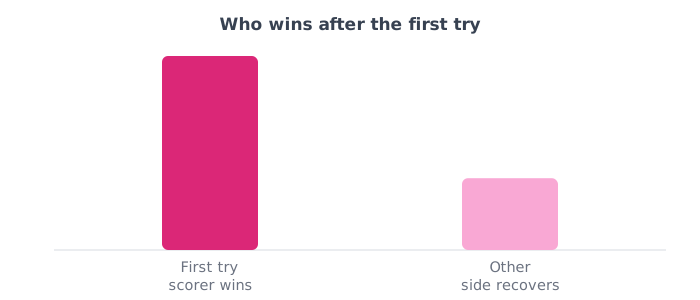
The team that scores the first try goes on to win just over seven matches in ten. Count any first score, a penalty goal included, and the figure is much the same, about seven in ten. That is a serious edge. It is also a long way from a guarantee, and both halves of that sentence deserve their own paragraph.
Why the first score carries so much weight
Part of it is simple: the first score is a preview. The team good enough to strike first is usually the better team, and the better team usually wins. But part of it is genuine game dynamics. An early lead lets a side play the match on its own terms, kick for territory without panic, take the points on offer, and make the chasing team force things. Chasing teams take risks, and risks become turnovers, and turnovers become the second try. The snowball is real.
And yet: roughly one match in four turns around
Flip it over and the number is genuinely encouraging. In roughly one match in four, the team that concedes the first try recovers to win or draw. Conceding first is a bad sign, not a sentence. For context, the opening minutes are also the quietest scoring window in the whole match, so a side that concedes early has usually lost a skirmish, not the battle.
What to do with this
Two lessons, one for each dressing room. If you strike first: the data says your win probability just jumped, so protect it like an asset. Take the points, kick the corners, make the opposition play from deep. If you concede first: the worst response is the panicked one, because forcing the game is exactly how one try becomes three. A quarter of teams in your position walk off winners, and they tend to be the ones that keep playing their own match. Either way, the first ten minutes deserve their own plan, which is a theme we keep returning to in how early scores change matches.
How we worked this out
Based on thousands of fully analysed matches spanning every variety of rugby, men’s and women’s, from amateurs to professionals, deduplicated so no fixture is counted twice. For each match we took the first try (and separately the first score of any kind) from the tagged events, then rebuilt the final scoreline from the same events, tries, conversions and goal kicks together, to decide the result, a method we have checked against externally recorded results. Matches with no tries at all were left out of the first-try figures. Analysed teams are often the stronger side, so we measured first scorer against final winner within each match rather than comparing across teams.
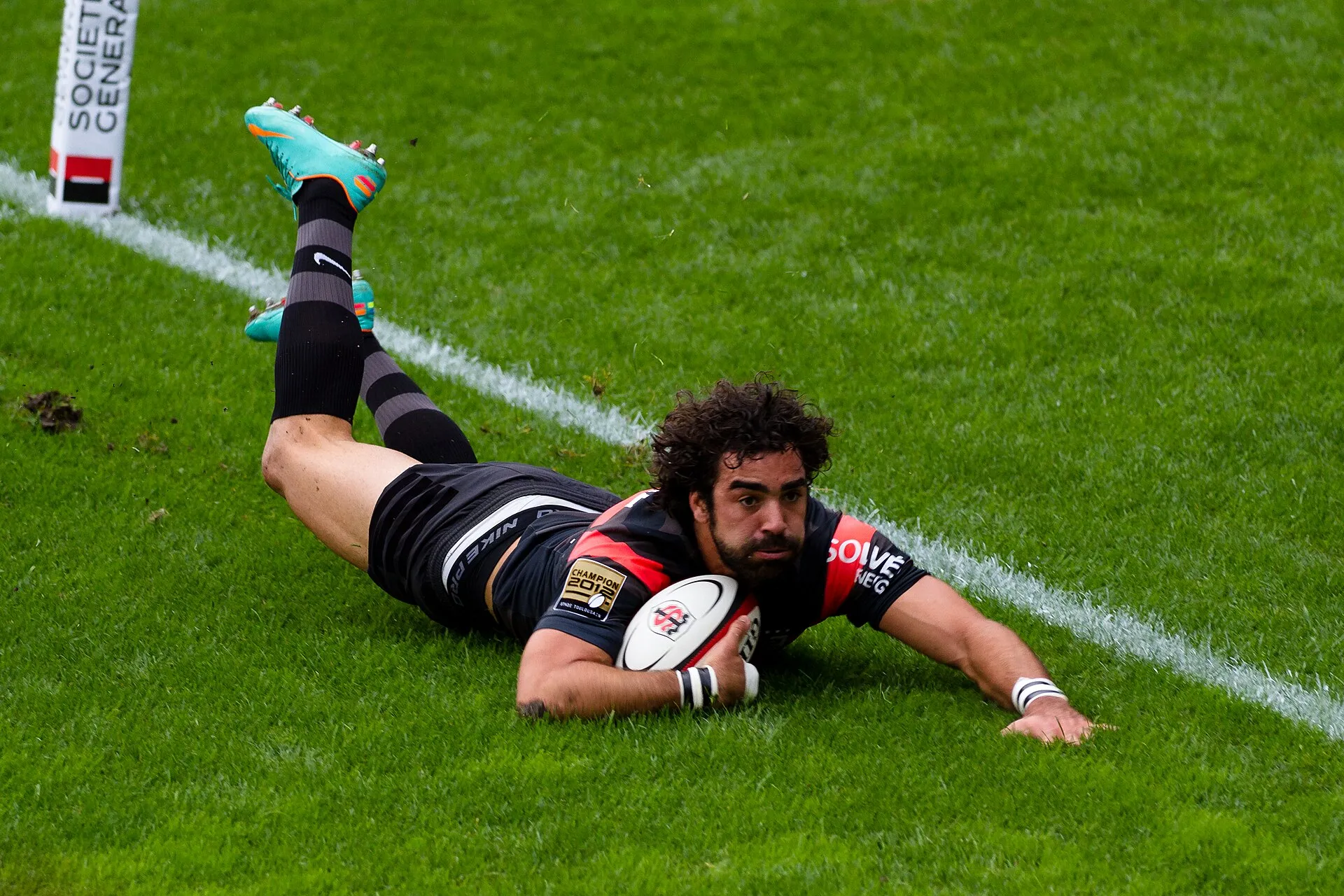
Hero photo: PierreSelim, CC BY 3.0, via Wikimedia Commons.