
The shortened lineout is one of rugby’s most confident tactical choices. Fewer bodies in the line, more strike options in midfield, and a knowing nod from the touchline. We collected more than thirty-five thousand lineouts, from every variety of rugby, men’s and women’s, from amateurs to professionals, each tagged with how many players stood in the line and whether the throwing team kept the ball. The results are worth a look before your next team meeting.
The five-man is the people’s champion
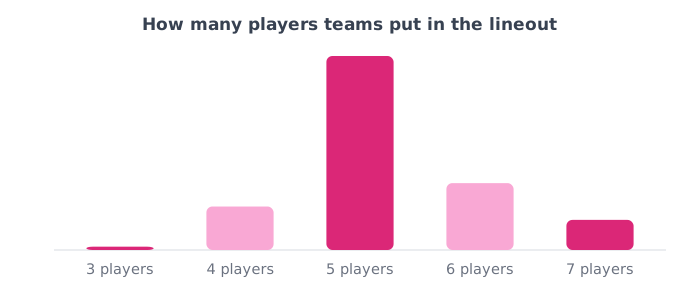
First, what teams actually throw. The five-man lineout accounts for well over half of all lineouts in our data, with the six-man next and the full seven-man a distant third. The three-man and four-man, the aggressive short options, are rarer than their reputation suggests, together making up only about one lineout in seven. Amateur rugby has quietly standardised on the five: enough jumpers to be safe, enough backs out of the line to attack.
More bodies, more ball
Now the success rates, and the pattern is as tidy as match data ever gets: the more players in the line, the more often the throwing team keeps its ball. Three-man and four-man lineouts are won a little over seven times in ten. The five-man does better, the six-man better again, and the full seven-man tops the table at nearly four wins in five. Overall, about three lineouts in four stay with the team throwing in. The gap from shortest to fullest is worth a handful of extra wins per hundred throws, no more, but in a set piece you might use ten times a match, over a season that is real ball.
Why the short lineout underdelivers
None of this means the short lineout is a mistake. It means it is a trade, and the data prices the trade honestly. Fewer players in the line means fewer jumping options, a more readable throw, and an easier life for the defending jumper. What you buy is attacking shape once you have won it. The catch at amateur level is that the “once you have won it” clause does more work than anyone admits, and a short lineout that loses the throw has paid for a strike move it never gets to run.
What to do with this
Be honest about why you are shortening the line. If your hooker and jumpers are winning the five-man cleanly, the short option is a luxury you have earned. If your lineout is leaking, the data says the first fix is more simple: throw to a fuller line, secure the ball, and build the clever stuff later. Set-piece security compounds quietly, because so many tries begin at the lineout, and the platform you keep is worth more than the shape you sketch. For the wider picture, see our look at set-piece success rates.
How we worked this out
Based on more than thirty-five thousand lineouts thrown by analysed teams across thousands of fully analysed matches spanning every variety of rugby, men’s and women’s, from amateurs to professionals, deduplicated so no fixture is counted twice. We record each lineout’s outcome and the number of players in the line; success here means the throwing team kept possession, resets are excluded rather than counted as losses, and a small number of oddly tagged player counts were set aside. The rare eight-man lineout won at the highest rate of all, but there are too few of them to lean on. Figures reflect the analysed team’s own throws, the side of the game our data captures most completely.
Hero photo: PierreSelim, CC BY-SA 3.0, via Wikimedia Commons.