Every rugby squad has the same argument. The wingers are convinced they win the games, the number eight reckons he does the hard part, and the hooker just wants the ball five metres out. We settled it with the data. We labelled over 13,000 tries, from grassroots clubs right up to the professional game, and tagged each one to the shirt number that scored it.
The wing is still king, just not by as much
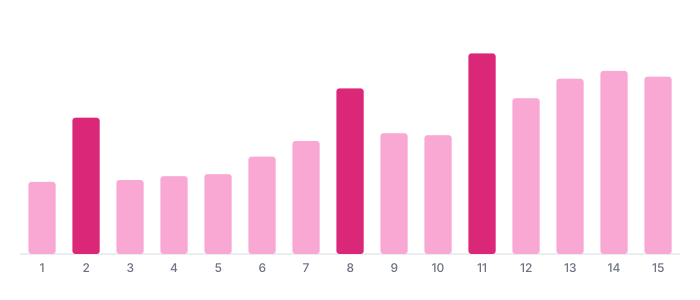
The left wing is the single most prolific finisher in our data, with the right wing and the fullback close behind. Get the ball to the edge and good things happen, exactly as the cliche promises, and it lines up with the professional game, where wingers score comfortably the largest share of tries. What the numbers question is not who scores the most, but how far ahead they really are.
The forwards score far more than they do on television
At the top level, backs score roughly two tries in three. Drop down to grassroots and school rugby and the pack claws a big chunk of that back: forwards score more than four in ten of all tries. The reason is the close-range game: the driving maul, the pick-and-go, the five-metre lineout. At community level a well-drilled maul is brutally hard to stop with a light or under-coached pack, and a big share of set-piece tries (and the set piece is where most tries start) get finished by the forwards who built them. The romantic 60-metre counter exists. It is just rarer than a rumble from five out.
Your secret finishers wear 8 and 2
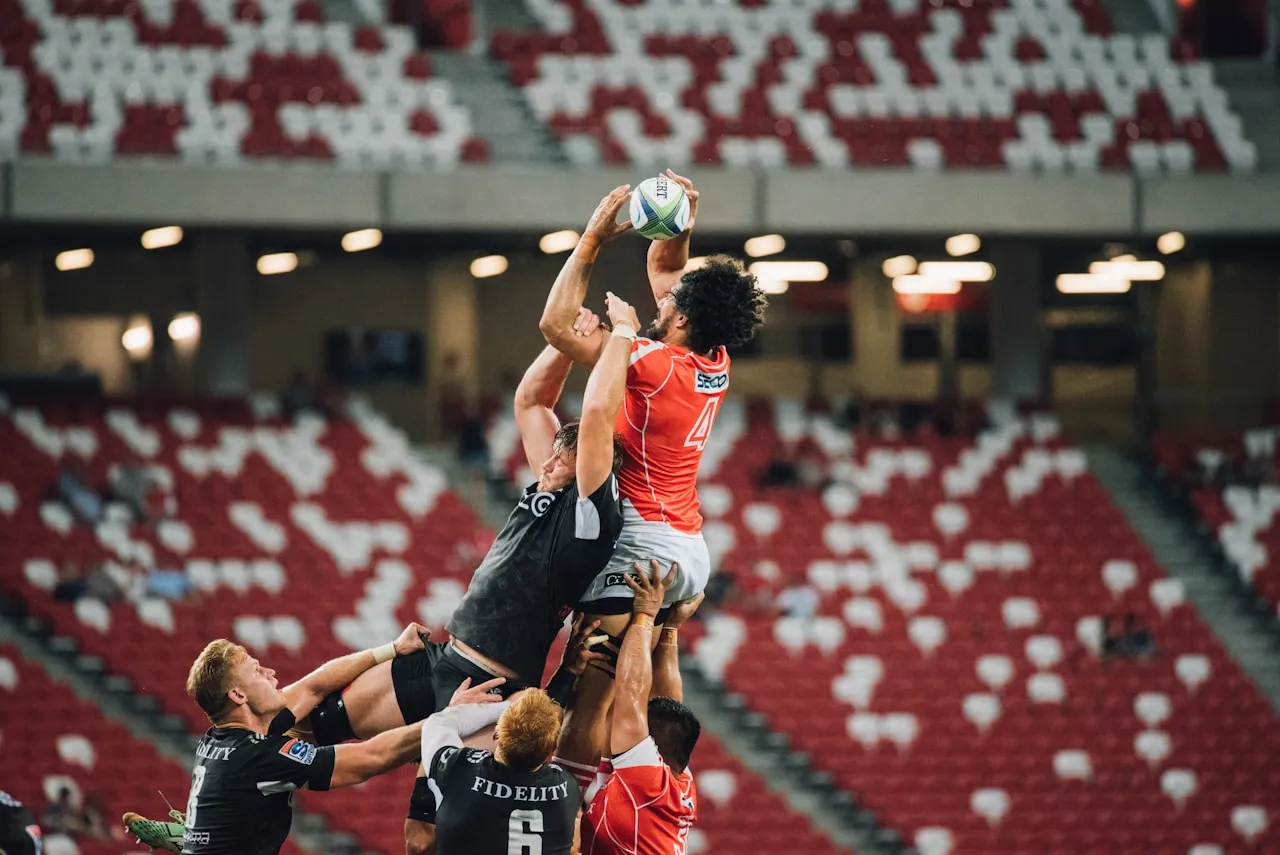
The number eight is comfortably the top-scoring forward, and one of the most prolific shirts on the whole pitch. The genuine surprise is the hooker, who outscores every prop, every lock and every flanker. That is the rolling maul and the close-range strike, and it means the player you hand the ball to on a five-metre lineout should probably be your hooker or your eight, not a backline move that has to survive three passes first. At the other end, the props and locks score least, which is the statistical reward for a career of doing the unglamorous work.
What to do with this
Two practical takeaways. First, your highest-value attacking set piece in the opposition 22 is often a forward strike, not a wide move, so rehearse the maul and the eight off the base as seriously as you rehearse the backline. Second, if your wingers are your top scorers but rarely touch the ball, that is a supply problem worth fixing, because the finishers are clearly there. Build the gameplan around who actually scores at your level, not who scores on a Saturday-night highlights reel.
How we worked this out
Based on over 13,000 tries scored by analysed teams and tagged to a starting jersey, across thousands of fully analysed rugby matches from grassroots clubs to the professional game, deduplicated so no fixture is counted twice. We use tries where our analysts recorded the scorer’s shirt number, and jersey number is a fair proxy for position at this level, where squads are picked close to 1 to 15. To sanity-check the try tags these figures rest on, we rebuild each scoreline from the same tagged events and it lines up closely with the official result. For where those tries begin on the pitch, see where tries actually come from.
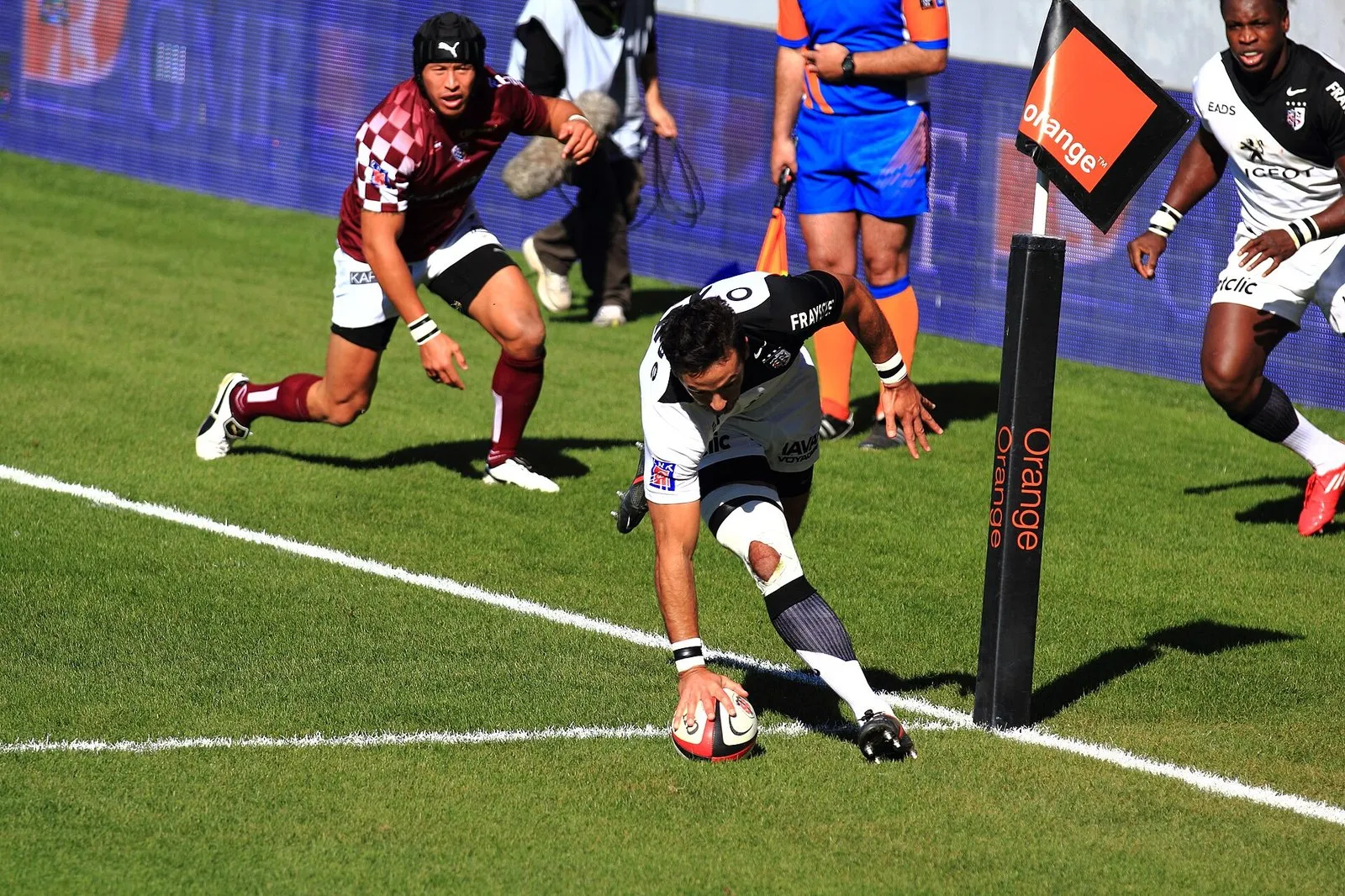
Hero photo: PierreSelim, CC BY 3.0, via Wikimedia Commons.