Most teams review their losses and skip their wins, or turn the review of a win into a highlights reel. Both waste the best coaching week you get. The week after a win is the one week players will listen to anything, because nobody is defensive, and it is the week the bad habits are hardest to see, because the scoreboard says they did not matter. They did, and they will next month.
Work out what kind of win it was
Our match data splits wins into two kinds. A little over a quarter of matches finish within one score, and in those the winner was often behind or level for most of the game and only went in front for good late on. About the same share are routs, decided by half time. A one-score win is a game you nearly lost and should be reviewed like one. A rout tells you little about your team and quite a lot about theirs. Look at the margin and the half-time score before you cut anything, and be honest about which one you had.
Find the twenty minutes you did not win
In a close win there is a stretch where the other side had you. Find it. The ten minutes after half time when you could not get out of your half, the quarter where every restart came straight back. That stretch is the review. What happened in it happened, and scoring last does not change it. If you cannot find it, look at the tackle count: in our data the team that tackles more usually loses, because a big count means a long time without the ball, and a win with a big count is a win the other side let slip.
Separate what you did from what they did not
A lot of wins are the opposition’s errors. A knock-on five metres out, three kicks at goal missed, a lineout that fell apart at the wrong moment. Watch a win back and ask, for each score, whether you made it happen or they let it happen. Across thousands of matches the side that concedes more penalties wins more often than it loses, because the team in front spends more of the match defending, so a penalty count in your favour is not proof of much either. What travels to next week is what you did. What they did stays with them.
Clip the three phases before the try
The try is the highlight. The three phases before it are the habit, and so is the lazy runner who got away with it because the defence was already broken. Clip the build-up, and clip the moments that would have been errors against a better side: the offload that stuck, the ruck you were slow to and nobody punished, the exit kick that found touch by a metre. Players remember the try. The point of the session is to make them remember the ruck.
Praise something specific
“Well done Saturday” teaches nothing. A clip of the twelve’s line speed on the third phase, with a sentence about why it worked, teaches fifteen people what you want and gives one of them a reason to do it again. Specific praise also buys you the harder clip that follows. A session that opens with a good clip, and means it, can go anywhere afterwards.
Same format, same length
A win is not a reason for a longer session. Under fifteen minutes, one theme, a conversation, the same as any other week. If the theme is the ten minutes you lost, say so at the start, so the group is not waiting for the highlights and does not feel ambushed when they do not arrive.
Keep the win in the room and take the review to training
None of this means souring the week. Let them enjoy it. The session is a quarter of an hour on Tuesday and it ends with the one thing you are going to train, not a list. A group that has learned that even wins get looked at properly stops treating video as the thing that happens when you lose, and that is the week it starts asking for the clips.
And if you won by fifty
Review the first twenty minutes and stop. A rout you won tells you as little as a rout you lost, and the last forty minutes are the other side getting tired. The heavy defeat is the mirror image of this post, and the advice is the same in both directions: the useful footage is the stretch when the game was still a game.
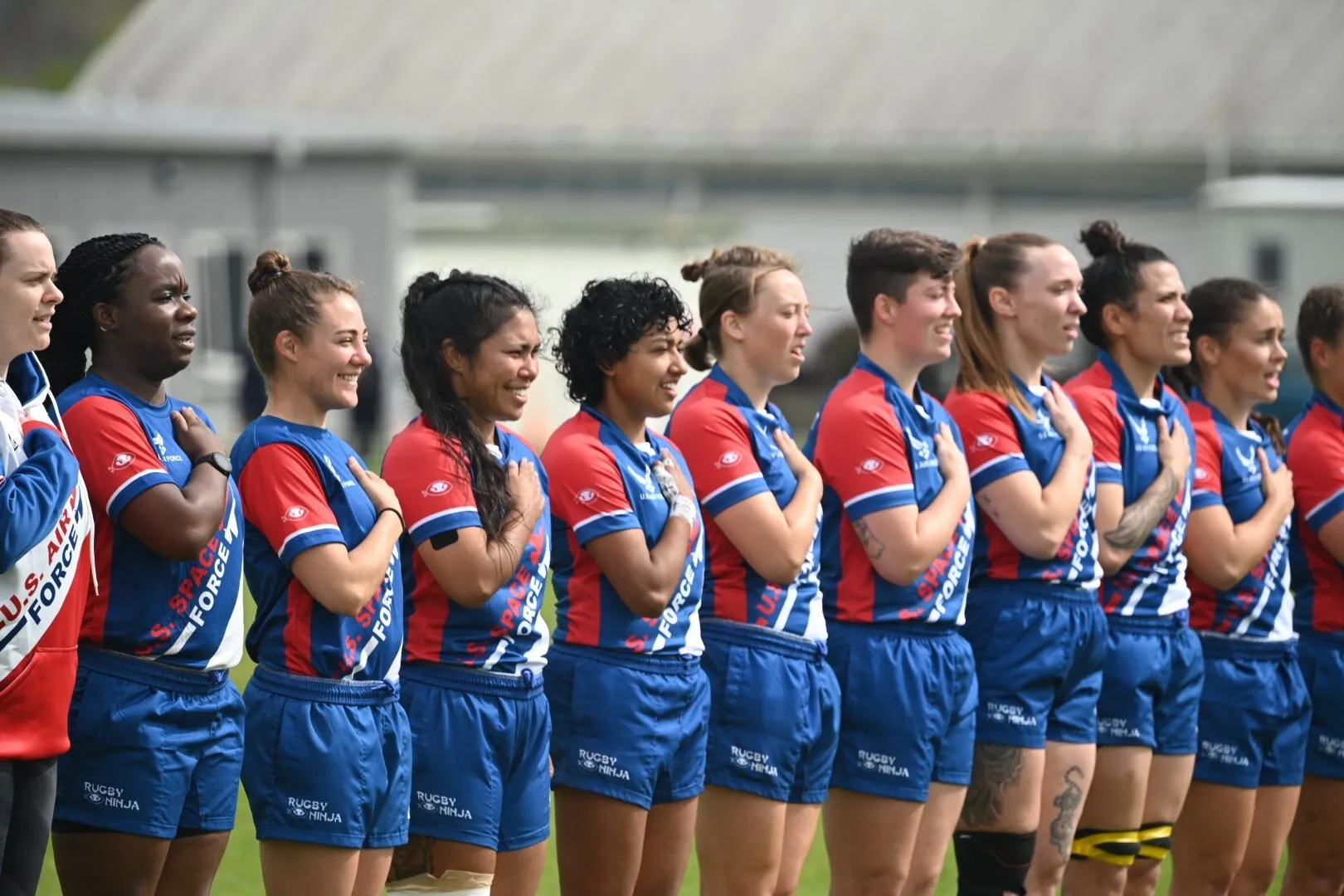
Hero photo: U.S. Air Force photo by 2nd Lt. Kate Anderson, public domain, via Wikimedia Commons.